51% Human for care delivery
Every consequential business decision is a human decision.
51% Human is a decision intelligence company. We help care providers improve consequential care-delivery decisions by integrating operational evidence with a clinically informed human lens.
What makes us different
51% Human makes human conditions measurable operating variables.
We test whether changing them changes a consequential care-delivery outcome.
- 1Human condition
- 2Measurable variable
- 3Focused intervention
- 4Operational outcome
- 5Economic consequence
Illustrative example — not a completed result
A receiving provider must accept, request more information, or decline an admission.
We might examine whether cognitive load or unclear authority contributes to delays, then test a focused change and measure time to decision.
Why now
Care delivery is constrained by human capacity.
Workforce shortages and rising complexity make it harder for available caregivers and clinicians to work at their highest use. We identify where human conditions may be limiting care capacity, test a focused change, and measure whether the provider's outcome improves. AI can help organize evidence and identify patterns — without a new platform or a major data integration. Clinical and operational decisions stay accountable to people.
The problem
Signals aren't explanations.
Most organizations have excellent data about WHAT is happening. Then they move quickly into an assumed WHY — and spend against it.
The costly shortcut
Understanding the problem is only the beginning. The work is to change it — and know whether what we did actually worked.
How it works
From problem to proof.
One repeatable system. It doesn't stop at an explanation.
01
Find it
What's really contributing to the problem?
One consequential outcome. The evidence you already have, plus evidence from the people closest to it. Known, assumed, unknown, contradictory — separated.
02
Fix it
What should we do about it?
An intervention chosen from the explanation and the conditions actually shaping the outcome. Never a predetermined solution.
03
Prove it
Did it work?
Measure both sides: did the human condition change, and did the performance outcome change?
04
Learn from it
What should we know next time?
What worked, what didn't, and under what conditions. Every engagement strengthens what we know about solving the next problem.
Learning returns to the beginning. Business problem → human factors → intervention → human outcome → business outcome → learning.
Problems we work on
Start with a problem that matters.
51% Human is built for consequential performance problems where organizations have data, have tried things, and still aren't getting the outcome they need.
- Care capacity
We should be able to deliver more care. Why aren't we?
- Workforce performance
Turnover, burnout, absenteeism or staffing conditions are affecting the business outcome.
- Access & throughput
People aren't moving through care the way the system intends.
- Transitions & handoffs
Care exists on both sides of the transition. Something is breaking between them.
- Quality & safety
The outcome needs to improve. Existing interventions haven't moved it enough.
These aren't five services. They're different problems entering the same system.
The difference
Does understanding WHO change WHY?
We don't assume it does. We find out.
And if it does — can changing that human condition change the business outcome?
The missing lens
Keep everything you already know. Add what you've been missing.
You don't need another system, more data, or a new framework. We build on the evidence and measures you already have, and connect what we find back to the outcome you already track.
The proof sequence
How we prove it.
Every engagement follows the same proof sequence, so a result is something we measured — not something we assumed.
Define
One decision, one outcome.
Define one provider-owned decision and the outcome it affects, in your words.
Baseline
Where are we now?
Establish a practical baseline from available records and the experiences of affected people.
Sort
What do we actually know?
Distinguish what is known, assumed, and unknown.
Select
Which human condition?
Select one human condition to investigate, based on the evidence.
Test
What do we change?
Test one feasible change.
Measure
Did it work?
Measure both the human condition and the operational outcome, before and after.
Prove both sides
An outcome can move and still fail the people inside it.
Neither measure replaces the other. We want evidence of what happened to both.
Human outcome
Did the human condition change?
What changed for the people inside the system — capacity, trust, load, the conditions the work was actually asking of them.
Business outcome
Did the performance outcome move?
Back to the measure the organization already cares about, in its own language, against its own baseline.
Human judgment keeps a deciding vote. 51% Human. Always.
Engagement
Bring us one consequential care-delivery problem.
We'll define the outcome, investigate the human conditions involved, and test whether a focused change improves it.
You bring
- One consequential performance problem
- What you've already tried
- The evidence you already have
- Access to the people closest to the outcome
Together, we
- Find it. Identify what is actually contributing.
- Fix it. Determine and implement an evidence-supported intervention.
- Prove it. Measure the human condition and the business outcome.
- Learn from it. Capture what the result teaches us about what to do next.
The people
Built at the intersection of people, business, clinical practice and technology.
51% Human brings together experience in business transformation, clinical practice, digital product, and AI — different lenses for understanding why important outcomes aren't moving and what to do next.
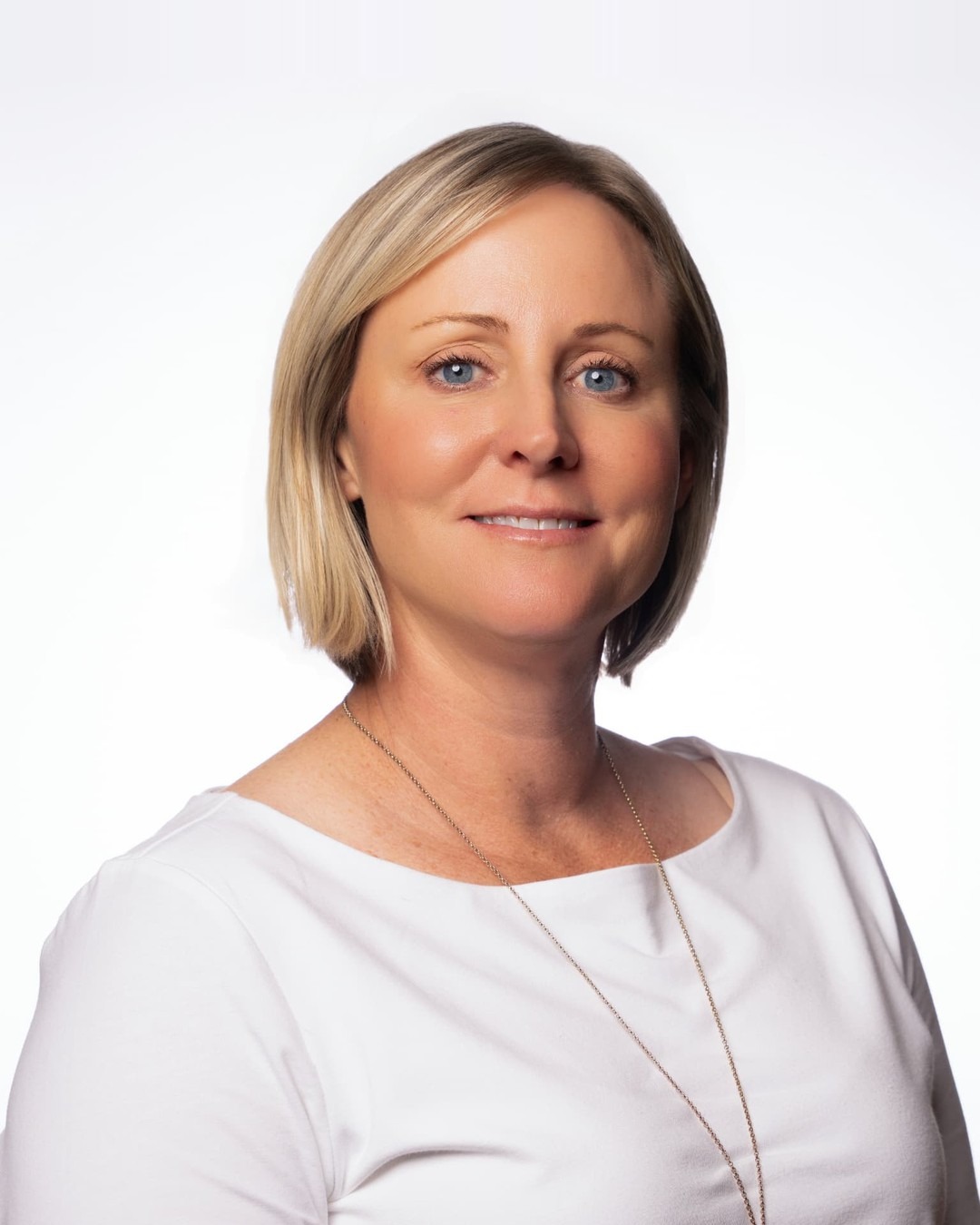
Shannon Stauff, MBC
Founder, 51% Human
Business Transformation & Human Systems
Shannon Stauff is a business transformation, growth, and product leader with experience spanning healthcare, behavioral health, technology, operations, and go-to-market. Most recently, she held multiple executive roles at Cadre, helping build and scale an AI-enabled behavioral health company across product, operations, transformation, and go-to-market.
Before Cadre, she founded Aloud, a mental health venture built around shared lived experience and human connection. At 51% Human, she brings these experiences together to understand why important business outcomes aren't moving — and what changes when we look at the human conditions surrounding them.
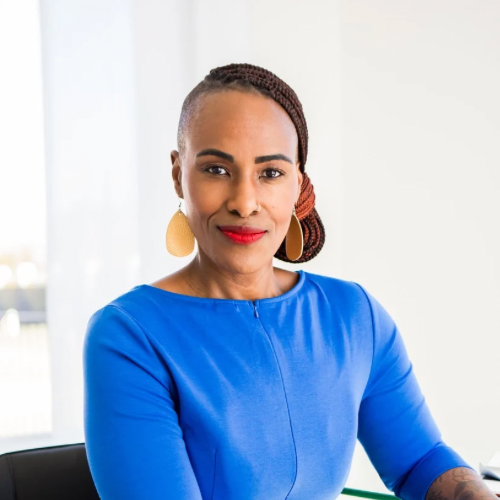
Dr. Charryse Johnson, PHD
Executive Decision Support & Human Impact
Clinical Practice, Trust & Safeguard Design
Dr. Charryse Johnson is a clinical counselor and consultant who helps executive teams make decisions they can stand behind. She sits with leaders at the moment of choice — new services, new technology, new policy — and works through who it affects, what the whole person needs, and what safeguards belong in place before anything ships.
Her work brings a clinically informed lens to organizational decision-making: trust, safety, oversight, and the conditions that determine whether people can actually do what's being asked of them.

Greg McGee
Founder, What's Next Advisors
Digital Product, Innovation & AI Advisor
Greg McGee is a digital product, innovation, and transformation leader with more than 30 years of experience helping organizations turn ideas and emerging technologies into meaningful customer and business value. Throughout his career, he has led digital initiatives for organizations including Optum, UnitedHealth Group, Harley-Davidson, and Life Time Fitness, and has built and led teams focused on digital products, customer experience, AI, and enterprise transformation.
Greg is the founder of What's Next Advisors, where he works with leaders to define digital strategy, navigate transformation, explore the practical application of AI, and turn ambitious ideas into measurable outcomes. He is also an entrepreneur, having co-founded and built a digital-first storytelling platform that reimagined the traditional obituary experience.
Different lenses. One question: What will actually move the outcome?
A simple place to start
Bring us one consequential care-delivery problem.
We'll define the outcome, investigate the human conditions involved, and test whether a focused change improves it.
hello@51human.com